

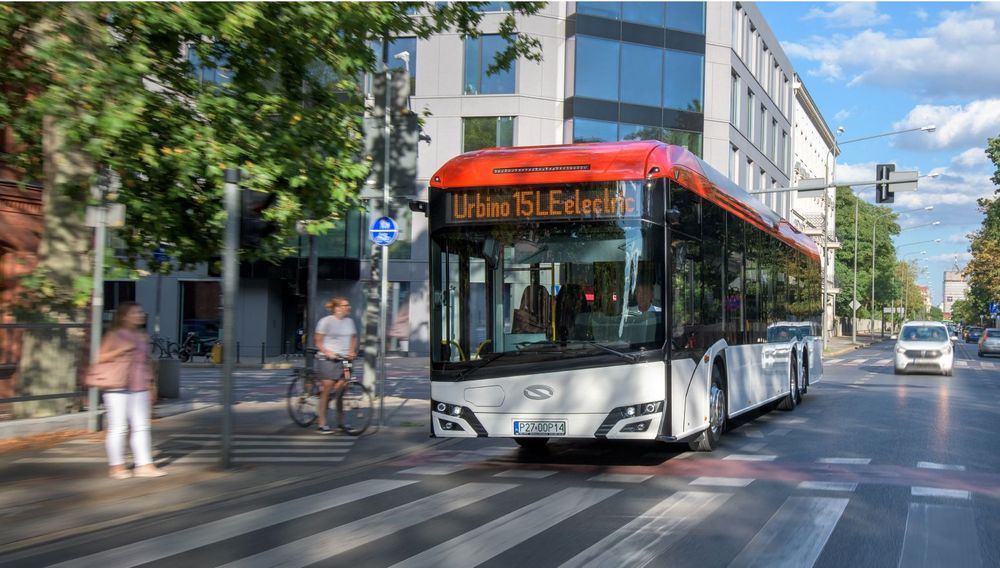
The most visible change in urban transport is also the quietest. Electric buses are replacing diesel models on city routes across Europe, Asia and the Americas, and passengers notice two things first: the silence, and the absence of exhaust at the stop. Transport authorities are driven by less visible arithmetic. Over a twelve-year service life, an electric bus’s lower fuel and maintenance costs can outweigh its higher purchase price, especially on busy urban routes where diesel engines run inefficiently in stop-start traffic all day long.
The Economics Turned First
Battery prices have fallen dramatically over the past decade, and that shift underpins the whole transition. An electric bus has far fewer moving parts than a diesel one: no oil changes, simpler braking that also recharges the battery, and less wear on components that depots replace constantly. Analysts at the International Energy Agency track electric buses as one of the clearest success stories in transport electrification, with China home to the overwhelming majority of the global fleet and European cities accelerating orders under clean-air rules. For operators, predictable electricity costs are easier to budget than volatile diesel prices.
Charging Is the Real Project
Buying the buses turns out to be the straightforward part. The harder work is infrastructure: depots need grid connections powerful enough to charge dozens of vehicles overnight, chargers must be sequenced so the fleet is ready for the morning peak, and some networks add opportunity charging at termini, where buses top up during driver breaks. Route planners also study elevation, winter heating loads and passenger weights, because range on a cold February morning differs sharply from the brochure figure. Cities that plan the system rather than just the vehicles report far smoother rollouts than those that treat charging as an afterthought.
What Riders and Residents Gain
The public health case is substantial. Diesel buses concentrate emissions exactly where people stand, walk and live, and electric models remove tailpipe pollution from those streets entirely, while regenerative braking cuts brake dust too. Noise reductions matter most on residential routes and night services. Drivers, meanwhile, report less fatigue from vibration and smoother acceleration, and several operators say the buses have become a recruitment advantage in a tight labour market.
Second-life planning for batteries is also maturing. Packs that no longer deliver a full day’s range on a bus can still serve for years as stationary storage at depots, soaking up cheap overnight electricity and softening the demand peaks that charging creates. That afterlife improves the environmental sums further, since the most carbon-intensive component of the vehicle keeps working long after it leaves the road.
Challenges remain honest ones: upfront budgets, grid upgrade timelines, and battery replacement planning. But the direction is settled. On a growing number of city routes, the diesel bus now looks like the experimental technology, and the quiet one like the default.
